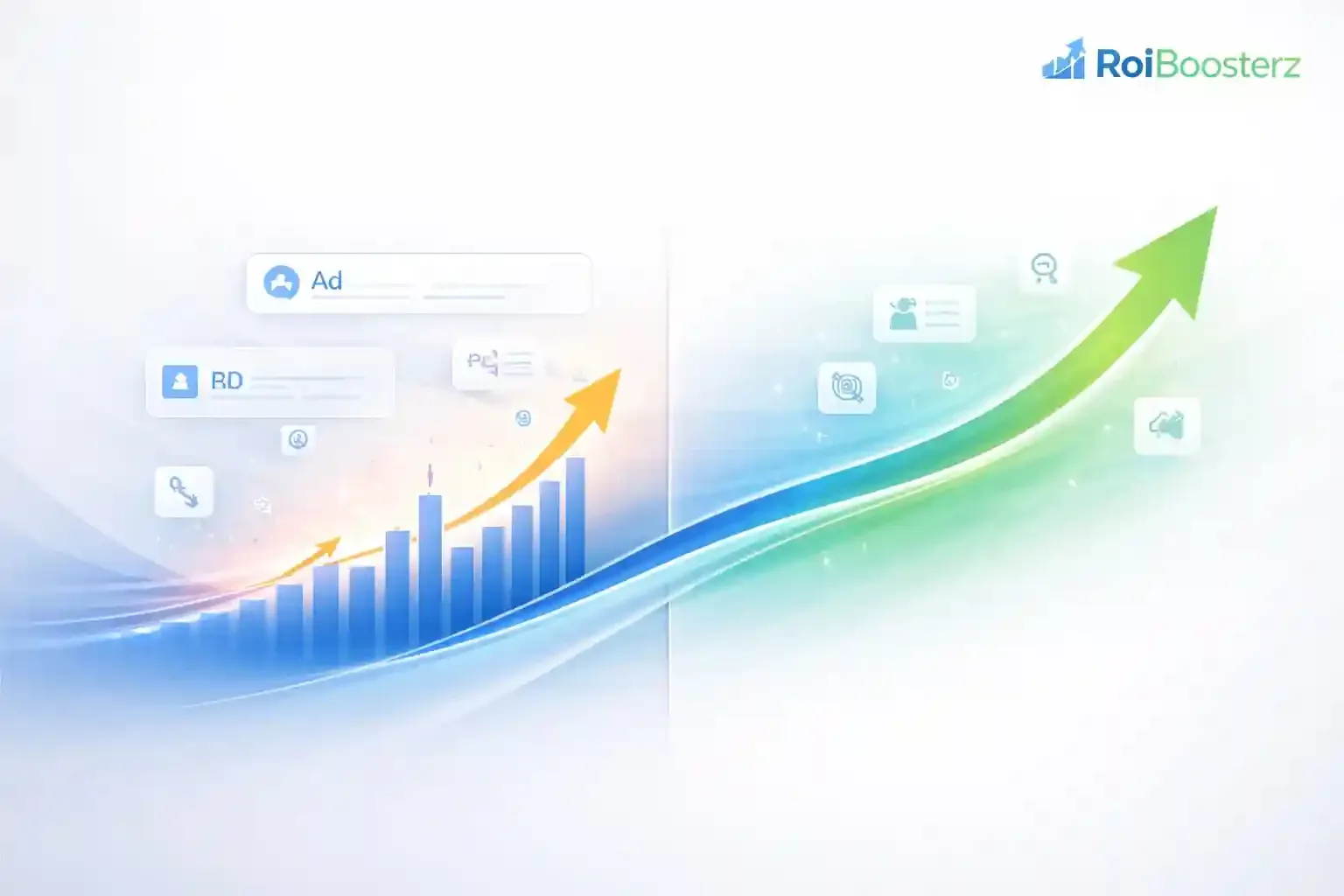
For years, the debate between PPC and SEO played out as an either-or decision. Startups poured money into Google Ads management to get instant traffic. Mature brands invested in SEO and waited months for organic rankings to compound. Both approaches worked, but neither worked as well alone as they do together.
Now, with AI overviews reshaping Google's results pages, ChatGPT and Perplexity pulling answers directly from the web, and zero-click searches climbing past 60 percent for many query categories, the old playbook is breaking. The businesses generating the most qualified leads in 2026 are not the ones spending the most on ads or publishing the most blog posts. They are the ones running a true integrated search strategy, where paid and organic data feed each other in a continuous loop.
This article breaks down how that loop works, why it matters more now than ever, and how to build one for your own lead generation engine.
Why "PPC vs. SEO" Is the Wrong Question
The traditional argument frames the two channels as competitors for the same budget. SEO is "free" traffic that takes time. PPC for lead gen is fast but expensive. Pick one based on your runway.
That framing misses the real opportunity. PPC and SEO occupy different parts of the same search ecosystem, and the data each one generates is enormously valuable to the other. When you run Google Ads on a keyword cluster, you get real conversion data within days: which search terms actually produce leads, what ad copy resonates, and which landing pages hold attention. When you rank organically for those same terms, you get compounding traffic that does not disappear the moment you pause a campaign.
A hybrid SEO PPC approach treats both channels as a single system. Paid search tests hypotheses quickly. Organic search scales the winners permanently. The result is better ad spend optimization, stronger search visibility, and a cost-per-lead that decreases over time rather than staying flat or climbing.
Spending on ads without a clear integration plan? Our PPC and Google Ads management team builds campaigns designed to feed your organic strategy from day one. Let's talk about what an integrated approach looks like for your business.
How AI Search Changes the Math
Google's AI Overviews, Bing's Copilot answers, and standalone AI search tools like Perplexity are rewriting the rules of search engine marketing. These systems pull from both paid and organic sources, but they prioritize content that demonstrates expertise, answers questions directly, and is structured in ways that large language models can parse easily.
This means two things for your strategy. First, the organic content you create needs to be written not just for human readers but for AI extraction. Clear definitions, direct answers to specific questions, well-structured headings, and schema markup all increase the likelihood that your content appears in an AI-generated summary. Second, PPC campaigns now compete in a results page where the top position is often occupied by an AI overview, not a traditional blue link or even a paid ad. That pushes your Google Ads management strategy toward more specific, long-tail, and high-intent queries where AI overviews are less likely to fully satisfy the searcher.
An integrated search strategy accounts for both of these shifts simultaneously. You use SEO to build the authoritative content that AI systems cite. You use PPC to capture the high-intent, bottom-of-funnel queries where a paid click still converts efficiently. And you let each channel's data sharpen the other's targeting.
The Feedback Loop: How It Works in Practice
The most effective hybrid SEO PPC campaigns share data across channels continuously, not quarterly in a slide deck. Here is what that looks like operationally.
Start by running paid campaigns against a broad set of keywords related to your service offering. Within two to four weeks, you will have conversion data that tells you which terms drive actual leads versus which ones attract browsers. This is search engine marketing at its most efficient: using paid traffic as a rapid research tool.
Take the converting terms and feed them into your SEO content plan. Build pages, guides, and resources around those validated keywords. Because you already know these terms convert, you are not guessing about which content to create. You are investing in organic rankings for queries with proven commercial value.
As organic rankings build for those terms, monitor your paid performance on the same queries. When you hold a strong organic position for a keyword, you can often reduce or pause ad spend on it without losing total traffic. The savings get redirected to new keyword clusters that need testing. This is ad spend optimization driven by real performance data, not arbitrary budget cuts.
The loop continues. New PPC tests reveal new converting terms. Those terms become SEO priorities. Organic rankings mature. Ad spend shifts again. Over time, your blended cost per lead drops because an increasing share of your traffic comes from organic, while your paid budget concentrates on the highest-value opportunities.
Want to see where your current ad spend is overlapping with organic opportunities you are already winning? Request a free hybrid search audit and we will map the gaps and overlaps across your paid and organic footprint.
Conversion Rate Optimization: The Missing Layer
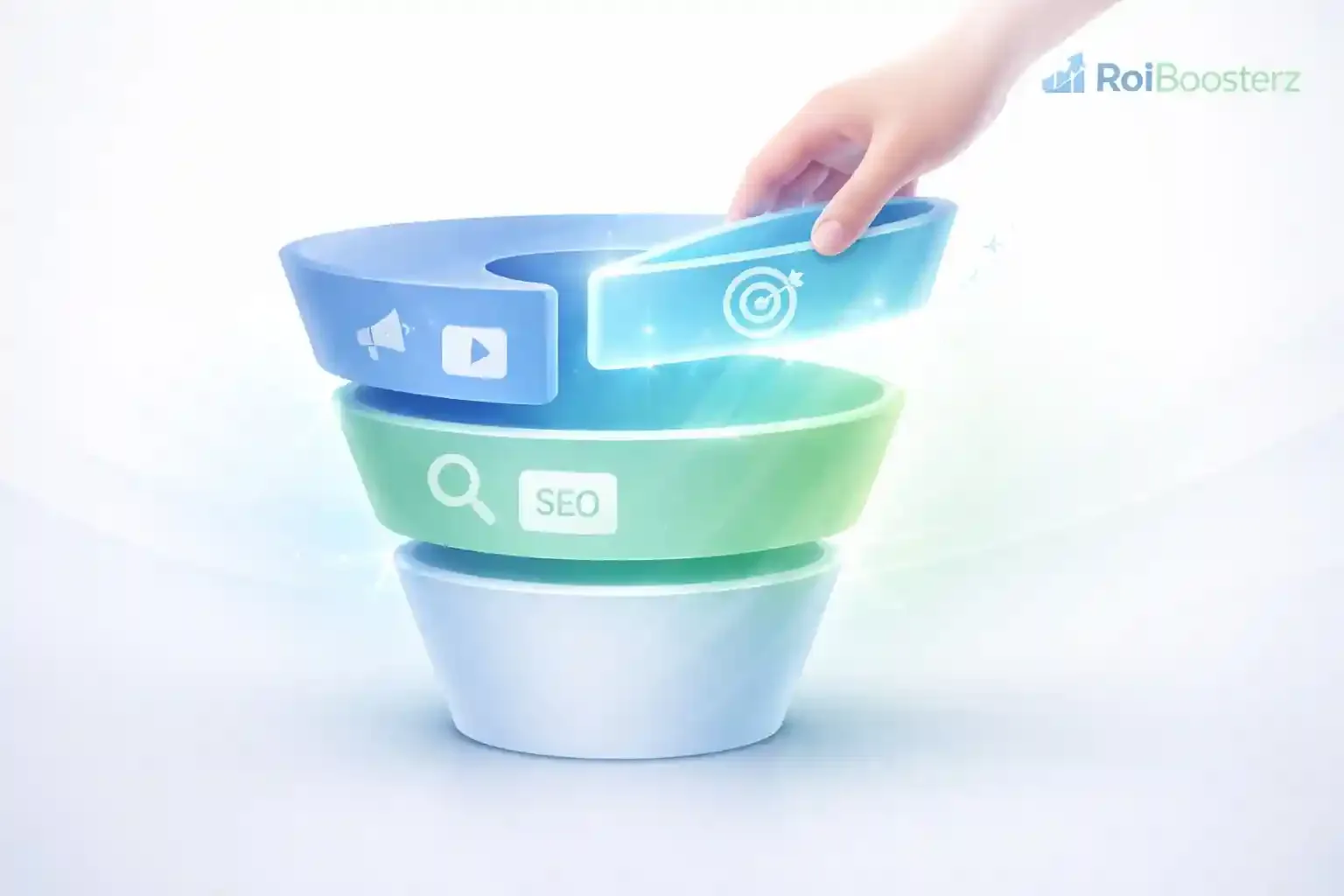
An integrated search strategy generates more traffic to the right pages. But traffic without conversion is just cost. This is where conversion rate optimization ties the entire system together.
When you are running PPC and SEO to the same landing pages, you have a natural testing environment. Paid traffic gives you fast, statistically significant data on what converts. Organic traffic tells you how engaged visitors are when they arrive with different levels of intent. Use both data sets to refine your page experience: headline clarity, form length, trust signals, mobile load speed, and the specificity of your call to action.
Pages that serve both paid and organic traffic need to do double duty. They must satisfy the informational depth that earns organic rankings and AI citations while also delivering the clear, focused conversion path that makes PPC profitable. The best-performing pages in an integrated search strategy accomplish this with a structure that leads with a direct answer to the searcher's question, builds authority through supporting detail, and presents a contextually relevant call to action once the reader's primary question has been addressed.
Building Search Visibility That Lasts
Search visibility in 2026 means more than ranking on page one of Google. It means appearing in AI overviews, being cited by conversational search tools, holding paid positions for high-intent queries, and dominating the results page for your core topics across every format: organic listings, paid ads, local packs, featured snippets, and AI-generated answers.
A brand that only invests in PPC rents its visibility. Pause the budget, and you vanish. A brand that only invests in SEO builds slowly and remains vulnerable to algorithm changes or AI overview displacement. A brand that runs both in coordination owns the results page. When a prospect searches for a term and sees your organic listing, your paid ad, and your content cited in the AI overview, trust compounds. Click-through rates rise. Lead quality improves. That is the compounding advantage of an integrated search strategy, and it is extremely difficult for competitors to replicate quickly.
Ready to stop treating PPC and SEO as separate line items? Our team at ROI Boosterz builds integrated search campaigns that compound over time. Explore our PPC and Google Ads services to see how we make paid and organic work as one system.
Frequently Asked Questions
An integrated search strategy is an approach to search engine marketing that treats PPC and SEO as a single coordinated system rather than separate channels. Data from paid campaigns, such as converting keywords and ad copy performance, directly informs organic content planning. Organic ranking gains, in turn, allow paid budgets to shift toward untested or high-value opportunities. The goal is lower blended cost per lead and stronger overall search visibility.
If you need leads quickly, PPC delivers faster results and gives you immediate conversion data. However, starting both simultaneously, even at a modest scale, is the most effective approach. PPC validates which keywords are worth pursuing organically, and early SEO investment begins compounding traffic that eventually reduces your reliance on paid spend.
AI-driven search features like Google's AI Overviews and tools like Perplexity pull answers directly into results, often reducing clicks to websites for informational queries. This makes it critical to optimize content for AI extraction through clear structure, direct answers, and schema markup on the SEO side. For PPC, it shifts ad spend toward more specific, high-intent keywords where AI summaries are less likely to fully satisfy the searcher's need.
A strong signal of ad spend optimization is when you are not paying for clicks on keywords where you already hold a top organic position, unless data shows that running both paid and organic on the same term increases total conversions. Reviewing search term overlap between your Google Ads account and your organic ranking keywords on a monthly basis helps identify where budget can be reallocated to higher-value opportunities.
Track blended cost per lead across both channels, not just individually. Beyond that, monitor keyword overlap between paid and organic, organic traffic growth for PPC-validated keywords, impression share and click-through rate by channel, conversion rate by landing page source, and the percentage of total leads coming from organic versus paid over time. The trend matters more than any single month's snapshot.